Have you ever known exactly what you should do for your health...and still not done it?
It is not because we don't care, lack information, or have poor intentions. Life gets busy. Before we know it, we're operating on autopilot and making the easiest choice rather than the intentional one.
This is one of the most human challenges we face and one of personalized nutrition's greatest opportunities. Even the most precise recommendations will have little impact if they never become part of someone's everyday life. For companies, this is not only a behavior change challenge, it is an engagement and value-creation challenge.
The opportunity is to help individuals to pause, reflect, and recognize the moments when they can choose differently.
The Gap Between Knowing and Doing
Innovation in personalized nutrition has often focused on improving precision of biological assessments including collecting multi-modal data, developing more sophisticated algorithms, and generating increasingly individualized recommendations. Those advances have propelled the field forward, but better information does not always lead to behavior change.
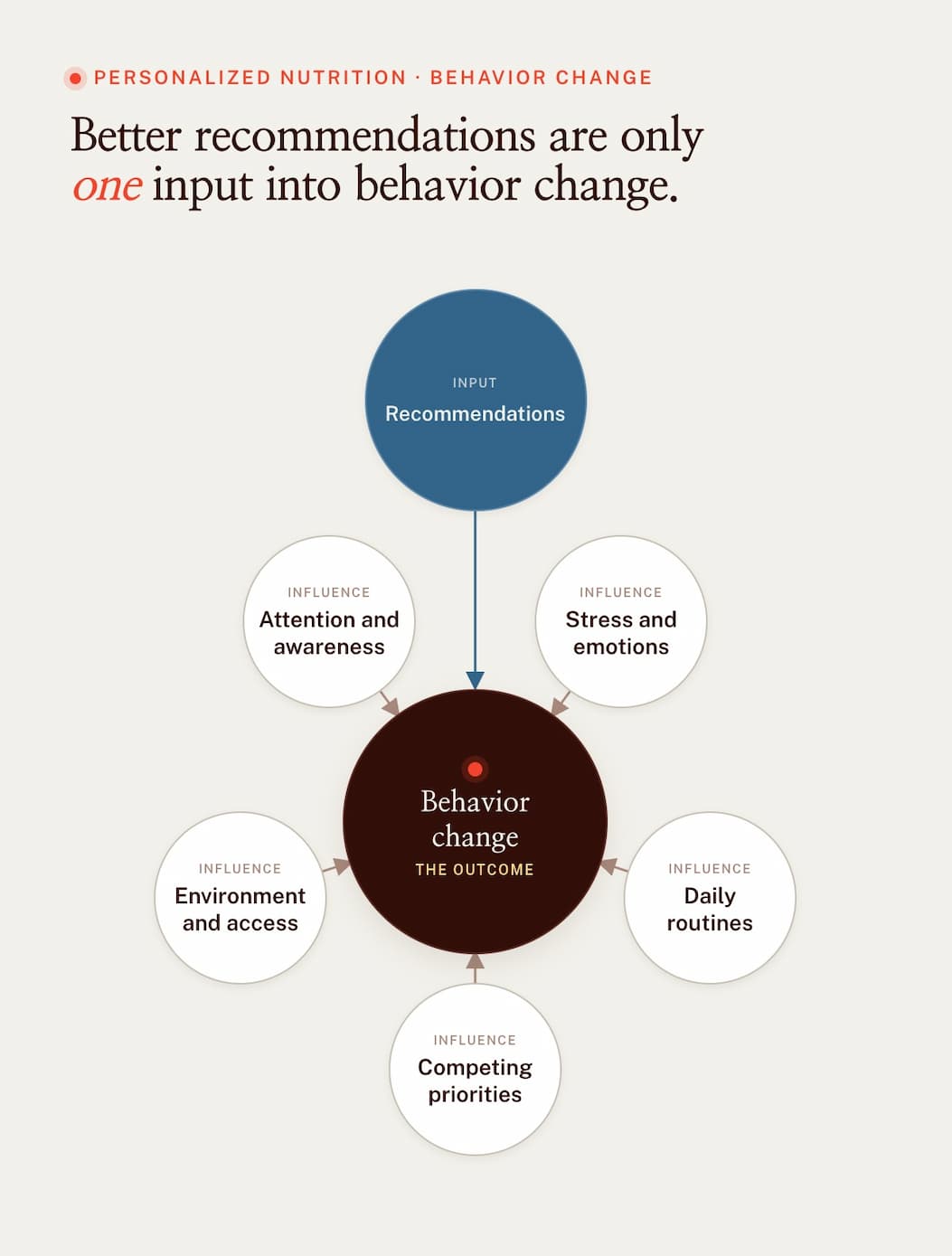
Whether someone chooses a healthier breakfast, takes a walk after work, or follows through on a personalized nutrition recommendation rarely depends on knowledge alone. Decisions are also shaped by competing priorities, emotions, routines, stress, and the countless small choices we make each day, many of them without conscious awareness.
An important opportunity for personalized nutrition is to move beyond understanding biology alone and consider the whole person including helping them recognize and understand their own behavior.
Mindfulness: More Than Stress Reduction
For many people, mindfulness is synonymous with meditation or relaxation. But a growing body of evidence suggests that mindfulness may also strengthen capabilities that support intentional behavior change.
Mindfulness does not eliminate stress or require perfect focus. Instead, it can help people become more aware of their thoughts, emotions, and automatic responses. That awareness may create an opportunity to pause, reflect, and choose behaviors that better align with long-term goals.
One recent review describes mindfulness as enhancing self-regulation, the ability to intentionally manage attention, emotions, motivation, and behavior. Instead of reacting automatically, people become better equipped to act with intention, even when faced with competing priorities or everyday stressors.
This perspective is reinforced by a meta-analysis of 111 randomized controlled trials involving more than 9,500 participants. Across diverse populations, mindfulness-based interventions were associated with improvements in executive attention, sustained attention, working memory, cognitive flexibility, and other aspects of cognitive functioning that support planning, decision-making, and follow-through.
An additional meta-analysis found that mindfulness-based programs consistently reduced psychological distress across diverse adult populations, suggesting benefits beyond narrowly defined clinical settings.
Collectively, these studies suggest mindfulness is more than another wellness practice. It provides an evidence-based approach that may help people step off autopilot and make more intentional decisions, the type of capability personalized nutrition depends upon.
What Mindfulness Means for Personalized Nutrition
Mindfulness-informed practices may become especially relevant as personalized nutrition continues to mature. Personalized nutrition improves the relevance of the guidance to the individual. Mindfulness may improve a person's capacity to act on it.
At Nlumn, our consumer research suggests that people want more than personalized information. They want help understanding what their data means, confidence that recommendations will fit within their daily lives, and ongoing support to translate insights into sustainable habits.
Many begin personalized nutrition programs with optimism, yet engagement declines over time. This does not mean personalization lacks value. Rather, it highlights how difficult it is to maintain change amid the realities of everyday life.
Mindfulness will not eliminate structural barriers such as cost, access, limited social support, low health literacy, or environments that makes healthier choices difficult. However, it may influence how effectively people use the recommendations and support available to them.
Emerging evidence suggests mindfulness may strengthen an often overlooked ingredient: becoming aware of the moment before a decision is made, responding more intentionally, and returning to healthier choices after falling off track.
By supporting follow-through and resilience, mindfulness could help individuals receive more value from recommendations they have already been given. If greater awareness and self-regulation improve follow-through, personalized nutrition solutions may be able to increase their impact without continually adding more data, testing, or complexity. Over time, this could contribute to personalized programs that are more efficient, affordable, accessible, and impactful.
For companies, this may also strengthen engagement and retention. Consumers who can recognize progress, negative setbacks, and return to their goals may be more likely to continue using a program and perceive sustained value from it.
Therefore, mindfulness may complement efforts to make personalized nutrition affordable, understandable, and practical.
That insight raises an important question for companies developing personalized solutions: How might we design experiences that not only deliver personalized recommendations, but also help people pause long enough to act on them?
What This Might Look Like in Practice
- Help people recognize the routines, competing priorities, emotions, and situations that influence their choices.
- Offer mindfulness-informed guidance at the moments it may be most useful.
- Design mindfulness practices that support recovery after a lapse, so one difficult day does not become program abandonment.
Expanding the Opportunity
The potential value of mindfulness may extend beyond consumers to the professionals who support them.
Systematic reviews found that mindfulness-based interventions improved resilience, self-awareness, empathy, self-efficacy, and overall well-being among health professionals while reducing stress and burnout.
This matters because even a scientifically sound recommendation can lose value when it is communicated without empathy, context, or an effort to understand the consumer's experience.
Strong personalized programs depend not only on generating more personalized recommendations, but also on supporting the professionals who help people understand, adopt, and sustain them. Mindfulness-informed practices may be one way to provide that support.
Nluminating the Path Forward
Mindfulness reminds us that health behaviors are rarely determined by knowledge alone. They are shaped by attention, awareness, emotions, and the countless decisions we make throughout the day.
For organizations, this is an invitation to think differently. Not only about the recommendations they generate, but also about the experiences they create and the people who deliver them. The opportunity for personalized nutrition lies in more than making recommendations more personal. It lies in helping people become more intentional in how they put those recommendations into practice.
Ultimately, the promise of personalized nutrition has always depended on turning insight into action.
For business leaders, the question is not whether every personalized nutrition solution should include a mindfulness program. It is whether the experience has been designed to help people notice, act, and recover in the moments that ultimately determine engagement and adherence.
That requires looking beyond the prevision of the recommendation to the full experience through which consumers understand it, use it, sustain it.